

What is the offshore? In reality, it’s nothing more than a geographically mappable system. And a state of mind.
First, offshore is the name for a structured system of financial activity that takes place in two locations: a micro-jurisdiction, situated away from the prying eyes of financial regulators, as well as the central hub to which the offshore or satellite is connected. The paradigmatic instance of fringe geography is the traditional and well-known offshore financial center, defined by its “remote” location. The traditional example is an island jurisdiction, like the Caymans. But “offshore” locales exist in other geographies, strewn across the global map, and can be defined by the characteristics of their legal geography rather than its actual location. Wherever they are located, offshore sites only exist because there is a corresponding onshore somewhere. Offshore is nothing more than a conceptual orientation and prioritization of geographies.
Second, offshore is a mindset, a way of thinking about financial systems, profits, and territorial conquest. The offshore is “a capitalist archipelago of free trade zones, offshore banks, tax havens, bought citizenship, and other states of exception.”1 It does not matter where the offshore is located because it’s really more mythology than reality, more jurisdictional rules than jurisdictional siting.
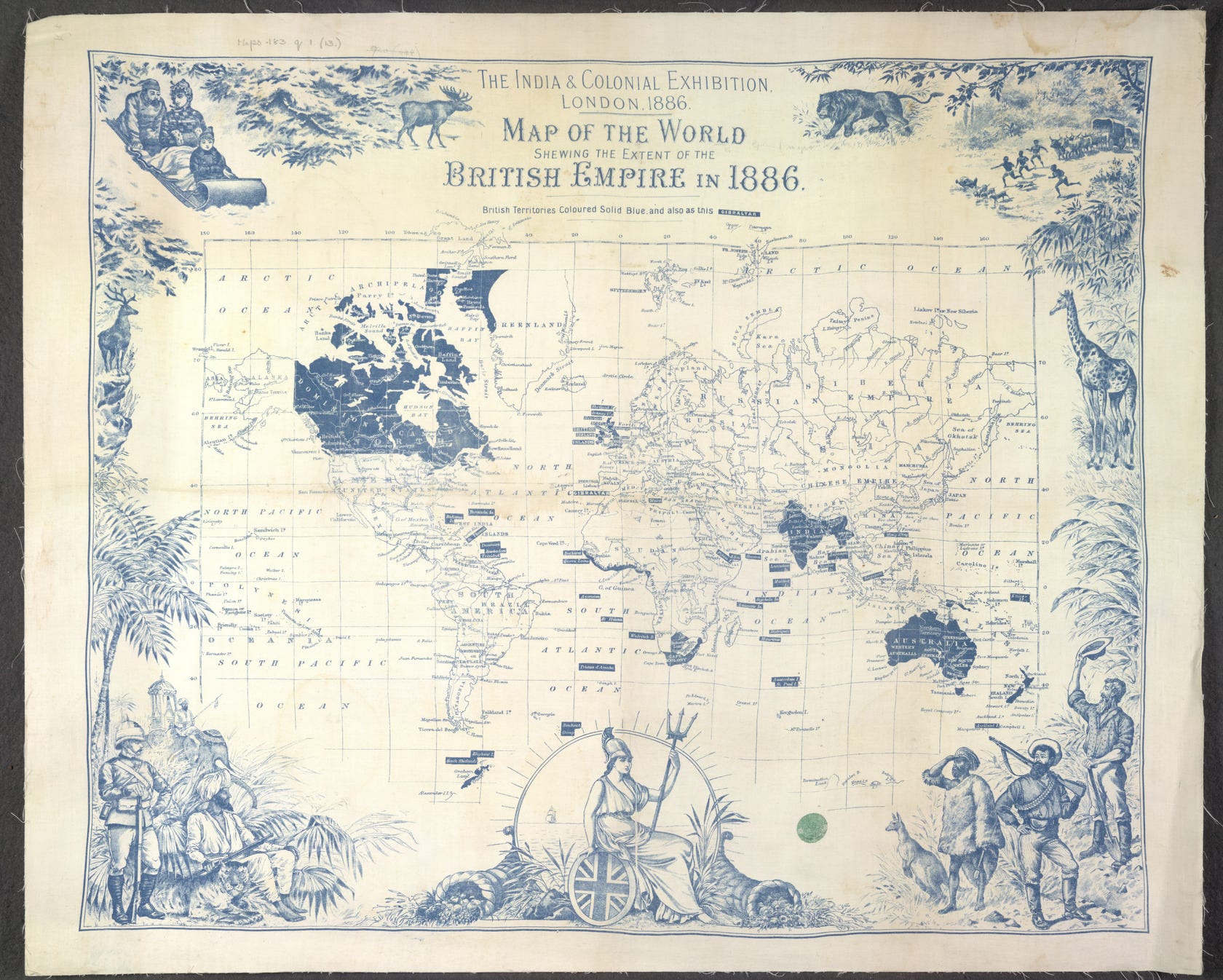
Why the new offshore is onshore.
Proving that offshore is not about being an island or being located in the middle of the ocean, the largest and most sought after tax havens are nowadays in the middle of the American prairie. Historically, the largest constellations of global tax abuse have always been the United Kingdom’s “spider web” of tax havens. More recently, however, the United States has usurped the top spot in the tax haven rankings on account of the wealth management services available in select states, like South Dakota, Wyoming, and Delaware. American states started competing with other global tax havens in the 1980s and 1990s, and states that were early adopters, like Alaska and Delaware, shared certain characteristics. They were all small states in need of industry to bring money into the state, lobbied heavily by trust lawyers, and run by part-time legislatures that were “committed to welcoming as much of the world’s money” as possible.


Now, trust companies in these states offer a perpetually renewed roster of trust products with names that belie that goal: Dynasty Trusts, Legacy Trusts, “Bloodline Trusts,” and the bold “Have Your Cake and Eat It Too” Trust (HYCET Trust®). And while tax justice networks rank the worst offenders, wealth managers rank the best sites for the clients (check those rankings out here).
Whether the micro-jurisdiction is a regulatory oasis in the prairie or ocean, what remains constant is that these micro-geographies all present as havens of regulatory freedom, located in territories that are remote from major urban areas, burdensome state governments, and direct agency oversight. Nevertheless, each of these satellite territories forms just one point in a larger constellation and a larger system of financial abuse and exploitation.
The mindset: men conquering land
What also remains constant, besides the structure of the onshore-offshore system, is the imagination that drives it. The desire for an offshore, whether it is in the ocean or on the prairie, has deep roots in the imperial drive to “discover” and conquer land. The notion of “discovery” is deeply problematic (Antonia Malchik has written about the history of the doctrine here), since most of the time the discovery has been contiguous with colonial settlement. When it comes to imperial fantasies of the offshore, the notion is rife with the “idealization (and gendering) of the island as a place of ownership, where any man can be a king.”


Being king, in the offshore context, means indulging in a geographic fantasy of dualisms: economic liberty and personal privacy, territorial domination and financial freedom. And the players involved are, predictably, corporate owners, real-estate developers, hedge funders, and billionaire investors who see the vast potential for personal gain.
This impulse has produced the tax havens that we currently have - constellations of “islands” or micro-jurisdictions tethered together by colonial power. The desire to build spaces that exist outside of traditional regulation has also produced more idiosyncratic movements, including the contemporary Seasteading movement, led by Patri Friedman (the grandson of Milton Friedman and founder of The Seasteading Institute in 2008) and funded by Peter Thiel. These self-described libertarians and anarcho-capitalists meet to discuss large-scale topics such as “How to start your own country,” and aspire to erect new land masses that will serve to liberate the chosen few from the burdens of governance, administration, and settled norms.
The romanticization of offshore spaces is a geographic fantasy turned into a profit-making reality of territorial accumulation, resource exploitation, and financial deregulation. The concept of offshore, and the imaginary that sustains it, is the dream of colonial discovery and the commandeering of geographic space that exists theoretically in contrast to historic sovereignties with their burdensome governmental systems, fraught economies, ailing infrastructures, and even lackluster weather.
Money flows and flees, capital roams, and assets travel. The flight patterns are not fully random, however, and it is not until the geography of high-wealth offshore banking is examined that the true extent of high-wealth benefit and exceptionalism appear. Speaking of offshore as both a strategy and a state of mind, one writer comments, “offshore can feel like an adolescent fantasy of the world, where white men sort things out over Scotch whiskey and see the rest of the world as a consumable resource.”2
My upcoming book, The House That Family Money Built (UC Press, September 2026), offers a deep dive into how legal architecture protects dynastic wealth and extracts from low-income families along the same lines it always has: race, gender, and class. You can pre-order the book here (or click on the book cover) and don’t forget to subscribe to Inheriting Inequality to get the latest posts!

Mimi Sheller, Caribbean Futures in the Offshore Anthropocene: Debt, Disaster, and Duration, 36 Env’t & Plan. D: Soc’y & Space 971, 976 (2018).
NICHOLAS SHAXSON, TREASURE ISLANDS: UNCOVERING THE DAMAGE OF OFFSHORE BANKING AND TAX HAVENS 184 (2012).
Very interesting article, thank you for addressing this complex topic!
I understand the many reasons to dislike the offshore attitude and to find flight from conventional governing structures objectionable (especially at the national policy level), but if I may play devil’s advocate: I think that offshoring, in general, is motivated and implemented differently at the personal level vs corporate or national levels. There are benefits to offshoring assets that apply at the individual level for many families well below billionaire status, so in the interest of not throwing out the baby with the bath water, here are a few ways in which families are served well by offshoring:
Offshoring structures, such as trusts or LLCs, provide robust asset protection since they can act as a "bullet-proof" barrier between one’s personal wealth, corporate assets and potential domestic threats (such as litigation and creditors). Offshoring offers judgment proofing (some jurisdictions do not recognize foreign court orders. Creditors must often re-litigate their entire case in the offshore court, which is prohibitively expensive and logistically difficult), high legal barriers (some regions require plaintiffs to post a large bond before filing a lawsuit and enforce a much higher burden of proof than domestic courts), and professional safeguards (this is especially beneficial for those in high-risk professions such as doctors, lawyers, or real estate developers who are more likely to face frivolous or predatory lawsuits.)
Another benefit to individuals is enhanced privacy. While international transparency standards like FATCA and CRS exist, offshore structures still provide significant confidentiality. Using trusts or foundations can provide ownership anonymity by obscuring the link between you and your assets on public records. Many jurisdictions do not maintain a public register of beneficiaries or shareholders, protecting you from "prying eyes" and unwanted public scrutiny.
But perhaps one of the greatest benefits to people who have built some wealth over their lifetime is advanced estate & succession planning. Offshore vehicles simply offer more flexibility than domestic wills for transferring wealth across generations: avoiding probate (assets held in an inter vivo trust generally do not form part of your estate upon death, allowing them to bypass the costly, public, and time-consuming probate process), exemption from forced heirship (some offshore laws allow you to override "forced heirship" rules found in certain home countries, giving you total freedom to choose your heirs.)
Additionally, offshoring delivers financial diversification by protecting against risks specific to your home country's economy or political climate: currency hedging (you can hold funds in multiple stable currencies like Swiss Francs, Singapore Dollars, to protect against domestic inflation or currency devaluation,) exclusive investments (certain global investment products, foreign stocks, or private equity deals are only available to investors using offshore structures), and stability (spreading wealth across jurisdictions mitigates the risk of a single government intervention, such as account freezes or sudden capital controls.)
So, for individuals, offshoring assets is primarily a strategy for wealth preservation, privacy, and long-term financial security rather than simple tax avoidance. By legally placing personal wealth in a foreign jurisdiction, one gains protections often unavailable in the home country.
Offshoring is one tool among many, and just like any other tool, it can be used for nefarious reasons or for perfectly legitimate reasons, especially in the case of families…
Once again, thank you for this post and shining light on some complex topics that deserve attention. Loved your article and hope the conversation continues.
Love this! We need to do a riff on the intersection of private international law and trust and estates. Headline could be Why is Citibank Headquartered in South Dakota? Answer: because they quietly eliminated the rule against perpetuities allowing people to create dynasties right here in the U.S. of A